Visiting Seattle Aquarium: Your planning guide
The Seattle Aquarium is a compact, multi-building waterfront aquarium best known for Pacific Northwest marine life, touch pools, otters, and the new Ocean Pavilion reef tank. It is easy to fit into a Seattle day, but timed entry, midday crowding, and the split layout between Pier 59 and Pier 60 matter more than most first-time visitors expect. Your visit goes much more smoothly if you book a slot early and follow a clear route instead of doubling back. This guide covers timing, entry, layout, and practical day-of tips.
Quick overview: Seattle Aquarium at a glance
If you want the short version before you lock in your day, start here.
- When to visit: Open daily 9:30am–6pm, with last entry at 5pm; weekdays at opening or after 3pm are noticeably calmer than 11am–1pm on weekends, when families cluster around the touch pools, otters, and feeding times.
- Getting in: Timed general admission starts at about $49.95 for adults, and there is no separate skip-the-line ticket or standard guided tour for general daytime visits, so advance booking matters more than upgrading.
- How long to allow: 1.5–2 hours works for most visitors, while feedings, diver talks, young kids, and extra time in the Ocean Pavilion can push it closer to 2.5–3 hours.
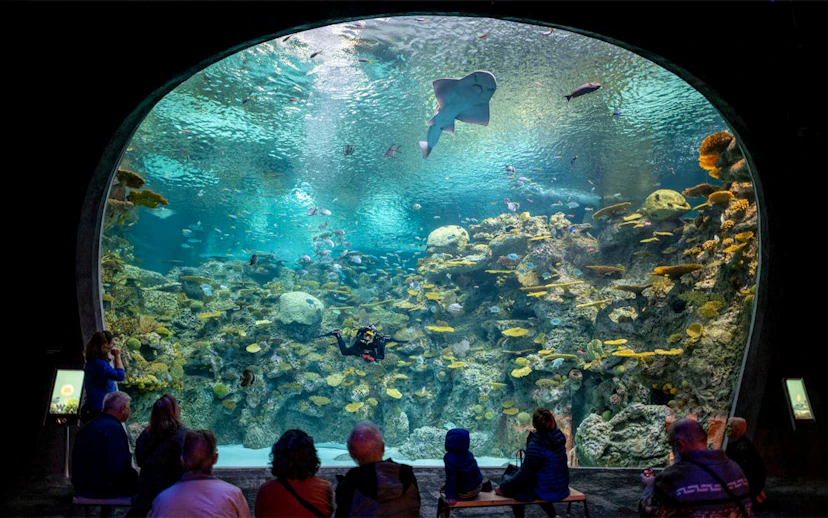
- What most people miss: The diver talks at the Window on Washington Waters tank and the free shark-and-ray overhead view near the Ocean Pavilion entrance are easy to rush past.
- Is a guide worth it? For most visitors, no; this is a self-guided aquarium, and the live feedings and talks add more value than paying extra for outside interpretation.
🎟️ Timed slots for Seattle Aquarium can sell out days ahead during summer weekends and holiday periods. Lock in your visit before the time you want is gone.
Jump to what you need
🕒 Where and when to go
🐠 Which animals to prioritise
♿ Facilities and accessibility
Where and when to go

How do you get to the Seattle Aquarium?
The aquarium sits on Seattle's central waterfront at Pier 59, a short walk from Pike Place Market and about 10 minutes on foot from University Street Station.
Address: 1483 Alaskan Way, Pier 59, Seattle, WA 98101 | Find on Maps
- Link light rail: University Street Station → about 10 min walk → use the downtown exit and head downhill toward the waterfront.
- Bus: Broad/Alaskan stop → about 3 min walk → useful if you are already moving along the waterfront corridor.
- Walking: Pike Place Market → about 7–10 min downhill walk → easy to pair with a waterfront half-day.
- Taxi/rideshare: 1483 Alaskan Way drop-off → direct approach → simplest option with kids, strollers, or tight timing.
- Driving: No dedicated on-site lot → use nearby paid downtown garages → allow extra time because waterfront traffic and parking searches can eat into your slot.

Which entrance should you use?
The Seattle Aquarium has 2 public entrances, and the main thing visitors get wrong is assuming only the Pier 59 lobby is valid. Both entrances scan timed tickets, so use the one that best matches where you are coming from.
- Pier 59 entrance: Located at the main lobby on the north side. Best for first-time visitors starting with the classic aquarium exhibits. Expect the busiest arrivals at opening and late morning.
- Ocean Pavilion entrance: Located on Pier 60 along Alaskan Way. Best for visitors already approaching from the south waterfront or Seattle Great Wheel side. Expect lighter traffic outside the midday rush.
Full entrances guide
When is Seattle Aquarium open?
- Monday–Sunday: 9:30am–6pm
- Last entry: 5pm
When is it busiest: Saturdays, Sundays, summer days, and the 11am–1pm window are the most crowded, especially around the touch pools, otter habitat, and live presentation times.
When should you actually go: Arrive for the 9:30am opening or enter after 3pm if you want more breathing room and shorter waits around the most interactive exhibits.
How do you get around Seattle Aquarium?
Layout and suggested route
The Seattle Aquarium is compact overall, but it is split across connected waterfront spaces rather than one single hall. In practice, that means it is easy to self-navigate, but it is also easy to bounce between buildings in the wrong order and save the biggest exhibits for when you are already tired.
- Pier 59 core exhibits: Lobby exhibits, jellyfish, octopus, touch pools, and Window on Washington Waters → budget 45–60 min.
- Pier 60 marine mammals: Sea otters, harbor seals, and fur seals → budget 20–30 min.
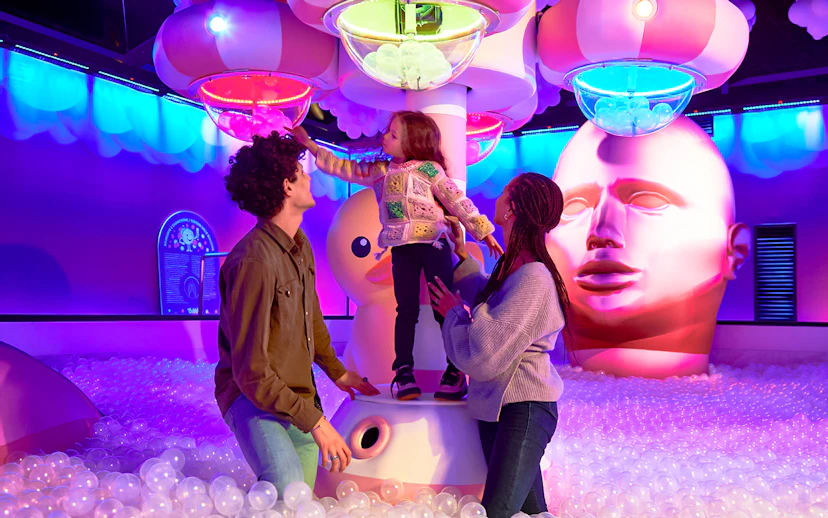
- Ocean Pavilion: Tropical reef tank, shark and ray views, and immersive gallery spaces → budget 30–45 min.
- Optional presentation stops: Diver talks, feedings, and kids' programming → add 15–30 min if the timing lines up.
Suggested route: Start at Pier 59, where the classic Northwest habitats build context for the rest of the visit, then move to the marine mammals, and finish in the Ocean Pavilion when you can slow down at the reef tank instead of using it as a quick first stop.
Maps and navigation tools
- Map: A digital visitor guide is available through the aquarium's mobile web tools and covers exhibits, presentations, and entry info; open it before you arrive.
- Signage: Wayfinding inside each building is good, but the transition between Pier 59, Pier 60, and the Pavilion is clearer if you already know your route.
- Audio guide/app: There is no standard self-guided audio tour; the mobile guide is more useful for show times and basic orientation than deep interpretation.
💡 Pro tip: Start with Pier 59 even if you enter through the Ocean Pavilion side, because the classic exhibits are easier to enjoy before the midday crowd builds around the touch pools.
Which animals and habitats should you prioritise?
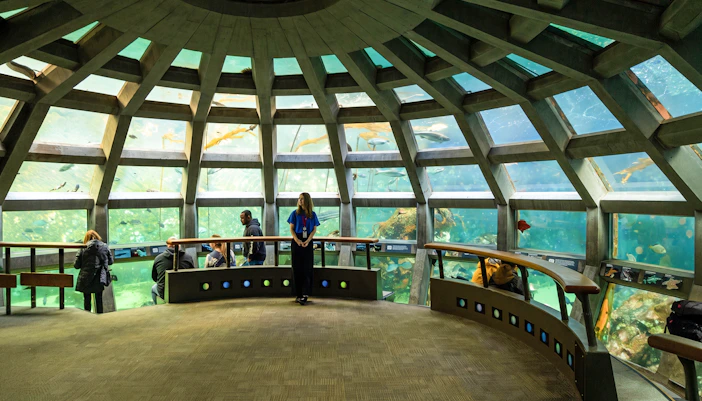
Window on Washington Waters
Habitat: Puget Sound kelp forest
This is the aquarium's signature local ecosystem tank, and it is where the Seattle setting makes the strongest impression. The scale, layered kelp, and mix of salmon, rockfish, and lingcod reward more than a quick glance. Most visitors stop for photos and move on too fast, but the diver presentations are what make the tank click because they explain what you are actually looking at.
Where to find it: Inside the main Pier 59 building after the early exhibit sequence.
Caring Cove touch pools
Habitat: Tidepool species
This is one of the most hands-on parts of the visit, especially for children who need more than glass tanks. Sea stars, urchins, and other tidepool animals feel simple at first, but staff interpretation makes the stop more meaningful. What people miss is that patience matters here: the busiest moments are not the most enjoyable, and even 10 minutes later the experience can feel far calmer.
Where to find it: Pier 59, in the touch-interaction zone near the core family exhibits.
Giant Pacific octopus
Species: Giant Pacific octopus
This is one of the clearest Pacific Northwest icons inside the aquarium, and it is worth slowing down for because octopus behavior changes the experience completely. Sometimes it looks hidden and still, and sometimes it transforms the whole tank with movement and color. Many visitors rush past if it is not front and center, but feeding or active periods can change that in minutes.
Where to find it: Pier 59, in the main exhibit run before you reach the touch pools.
Sea otters
Species: Southern sea otters
If you are visiting with kids, this is usually the exhibit that gets the strongest reaction. The habitat is lively, easy to read from multiple angles, and especially fun around feeding times when behavior becomes more visible. What people often miss is that it is worth waiting rather than circling back later, because crowding rises and falls quickly here.
Where to find it: Pier 60, in the marine mammal section.
Harbor seals and fur seals
Species: Harbor seals and northern fur seals
These habitats are easy to treat as a quick pass-through on the way to the Ocean Pavilion, but they give the visit a stronger Pacific Northwest feel than the tropical exhibits alone. The contrast between the two species is part of the point, especially if you stop long enough to watch how they move and surface. Many visitors give them less time than they deserve.
Where to find it: Pier 60, near the outdoor-adjacent mammal habitats.
Ocean Pavilion reef tank
Habitat: Tropical coral reef
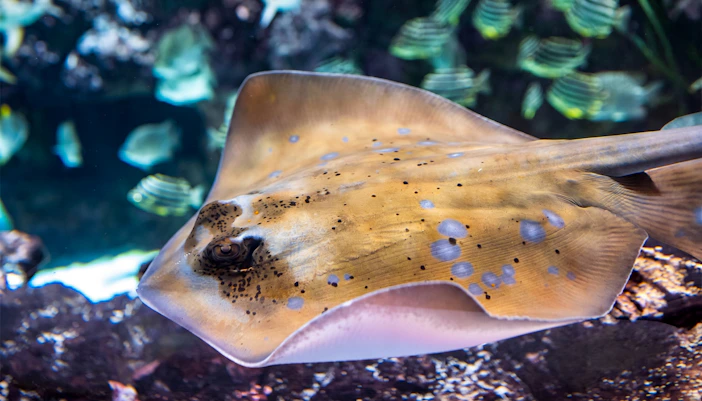
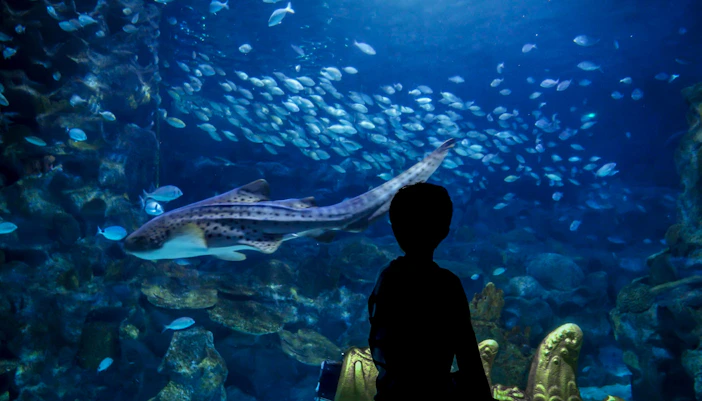
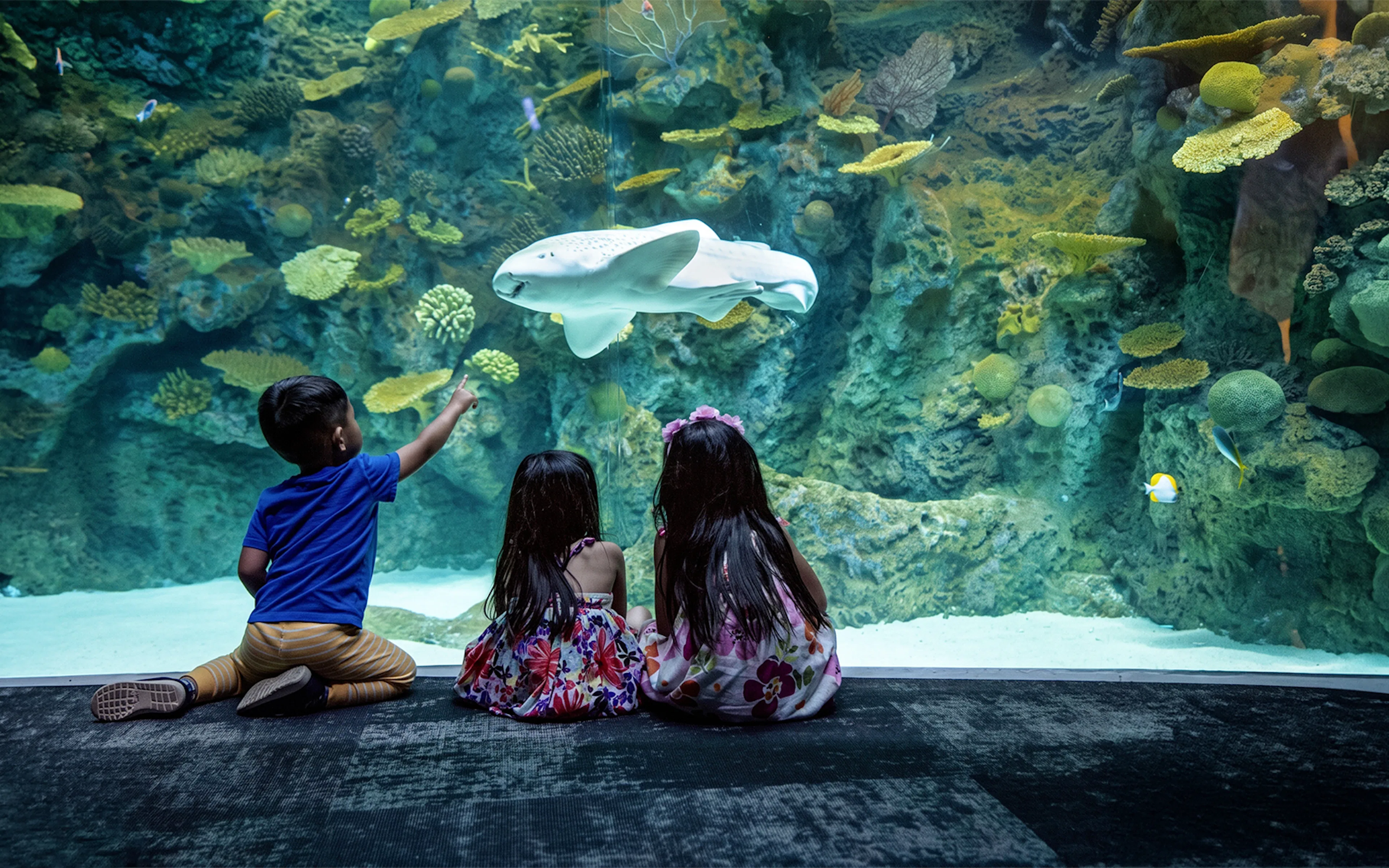
This is the new visual centerpiece of the aquarium, with rays, sharks, coral, and schooling fish creating the biggest single wow moment on site. It works best if you do not treat it like a photo stop and leave; slow laps around the viewing areas reveal more each time. Many visitors miss the quieter angles and the overhead views because they stay only at the first glass.
Where to find it: Inside the Ocean Pavilion on Pier 60.
Facilities and accessibility
- 🎒 Cloakroom/lockers: There is no bag or coat check, so plan to carry everything you bring for the full visit.
- 🚻 Restrooms: Restrooms are available in each building, and family-friendly facilities are part of the main visitor setup.
- 🍽️ Café: The on-site café at Pier 59 serves light snacks and drinks and is best treated as a convenience stop rather than a full meal plan.
- 🛍️ Gift shop/merchandise: The main gift shop sits near the exit and is strongest for aquarium-themed gifts, kids' items, and conservation-minded souvenirs.
- 💧 Water fountains/bottle refill stations: Personal water bottles are allowed, and refill access is available on site.
- 🪑 Seating/rest areas: Seating is available around the buildings, but the best pause points tend to be near larger viewing windows rather than in the busiest family zones.
- 🩺 First aid / medical station: Guest assistance is available on site if you need help during your visit.
- 👶 Family facilities: The aquarium includes family restrooms, and the newer family-focused spaces are better set up for short breaks with younger children.
- ♿ Mobility: The aquarium's public areas, exhibits, and restrooms are wheelchair-accessible, and wheelchairs are available to borrow on a first-come basis at Pier 59 and the Ocean Pavilion.
- 👁️ Visual impairments: Standard daily visits do not use a full public audioguide system, but the aquarium can arrange some specialized access support for pre-planned visits.
- 🧠 Cognitive and sensory needs: This is generally a manageable indoor attraction, but the touch pools, kids' zones, and feeding times are the loudest and most crowded parts of the visit.
- 👨👩👧 Families and strollers: Strollers are allowed throughout the route, and the main visit path is wide enough for stroller use across the full campus.
- 🐕 Service animals: Service animals are permitted in line with ADA access expectations.
- 🪜 Limitations: The main experience is step-free, but some optional upper-level areas are less essential than the ground-level core route, so you are not missing the main visit if you stay on the most accessible path.
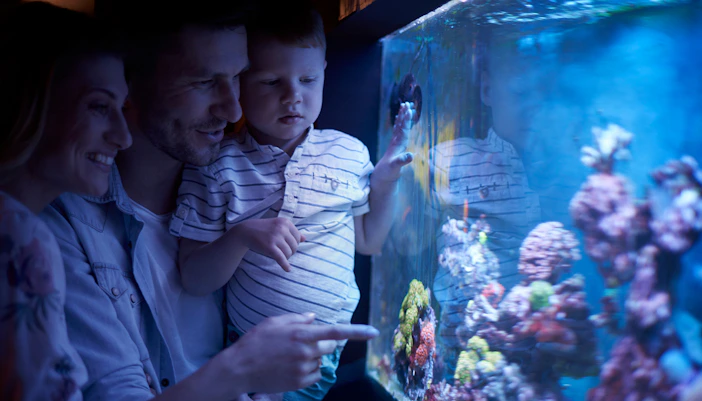
- 👶 Age fit: This is especially good for toddlers through grade-school children because touch pools, otters, sharks, and rays all reward short attention spans.
- 🕐 Time: With young children, 2–2.5 hours is realistic, and the best priorities are the touch pools, octopus, otters, and the Ocean Pavilion reef tank.
- 🏠 Facilities: Family restrooms, stroller-friendly paths, and newer kid-focused spaces make the visit easier than many city museums.
- 💡 Engagement: Ask at entry about kids' activity sheets or family programming, because a simple scavenger-hunt structure helps children slow down instead of sprinting to the next tank.
- 🎒 Logistics: Bring only a light bag, arrive close to opening, and avoid stacking the aquarium after a long walking morning if you want children to stay engaged.
- 📍 After your visit: The Seattle Great Wheel and the broader waterfront are the easiest nearby add-ons if kids still have energy left.
Rules and restrictions
What you need to know before you go
- Entry requirement: Every visitor needs a valid timed ticket, and popular slots can fill before the day of your visit.
- Bag policy: Small bags and backpacks are allowed, but there is no storage service, so you need to carry what you bring.
- Re-entry policy: Same-day re-entry is allowed, but keep your wristband or proof of admission so you do not slow yourself down returning.
Not allowed
- 🚫 Food and drink: Outside food and drink are not permitted inside the aquarium, though personal water bottles are allowed.
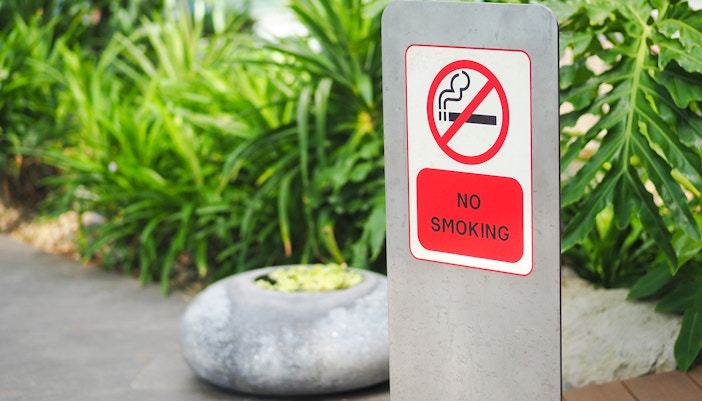
- 🚬 Smoking and vaping: Smoking and vaping are not permitted inside the attraction.
- 🐾 Pets: Pets are not allowed, but service animals are permitted.
- 🖐️ Touching animals: Do not touch animals outside designated touch areas, because hands-on interaction is limited to supervised tidepool experiences.
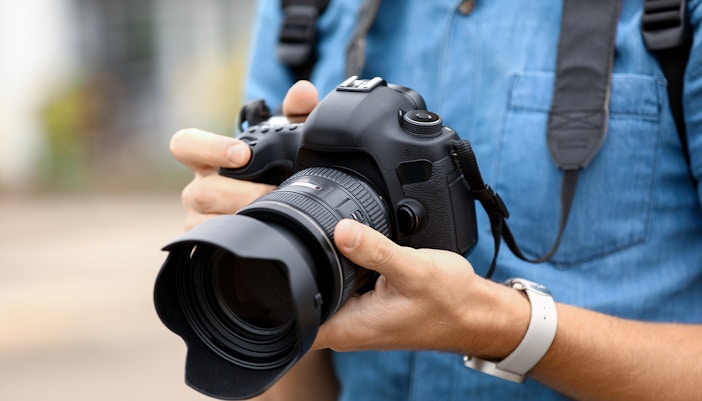
Photography
Non-flash photography is generally allowed for personal use, but tripods and large filming setups are not part of the standard visitor experience. The clearest distinction is between casual photos, which are fine in most public exhibit spaces, and gear-heavy shooting, which can interfere with crowd flow. If you are photographing children in the touch zones or around presentation areas, give staff space to manage the exhibit first.
Practical tips
- Booking and arrival: Book your timed slot ahead if you are visiting on a summer weekend or holiday period, and aim to arrive about 10–15 minutes early so entry screening does not cut into your visit.
- Pacing: Save your longest stop for the Ocean Pavilion at the end; if you do it first, the older Pier 59 exhibits can feel rushed once crowds build behind you.
- Crowd management: The best low-stress window is right at 9:30am or after 3pm, because the 11am–1pm band pulls together families, field trips, and people timing their visit around lunch.
- What to bring or leave behind: Bring a small bag, not a full daypack or luggage, because there is no storage and you will be carrying everything through multiple buildings.
- Weather planning: Even though most of the visit is indoors, you still move between waterfront spaces, so a light layer helps on windy or damp Seattle days.
- Food strategy: Eat a real meal before you enter or plan one after, because the on-site café works better for snacks and drinks than for a full lunch break.
- With kids: Head to the touch pools early if that is your priority, because waiting times and crowding there feel much bigger to children than the actual line length suggests.
- If you are using CityPASS: Reserve your aquarium time in the app as soon as your Seattle plans are firm, because the pass does not remove the timed-entry requirement.
What else is worth visiting nearby?
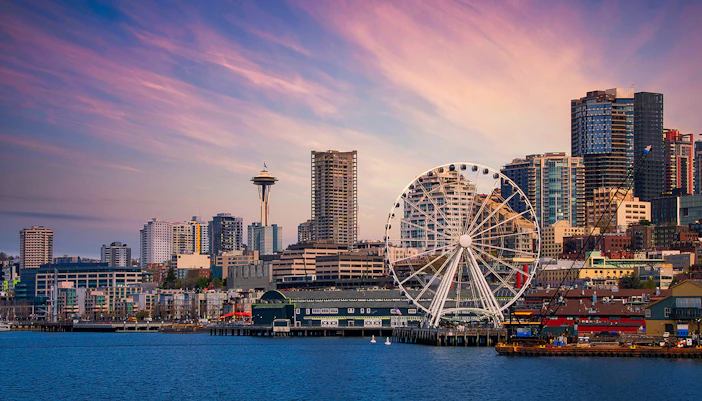
Commonly paired: Seattle Great Wheel
Distance: 0.2 mi — about 5 min walk
Why people combine them: It is the simplest same-waterfront pairing if you want one indoor attraction and one short scenic ride without crossing town.

Commonly paired: Pike Place Market
Distance: 0.3 mi — about 7–10 min walk
Why people combine them: The market is close enough to turn the aquarium into an easy half-day plan, and it solves the post-visit lunch question better than staying on site.
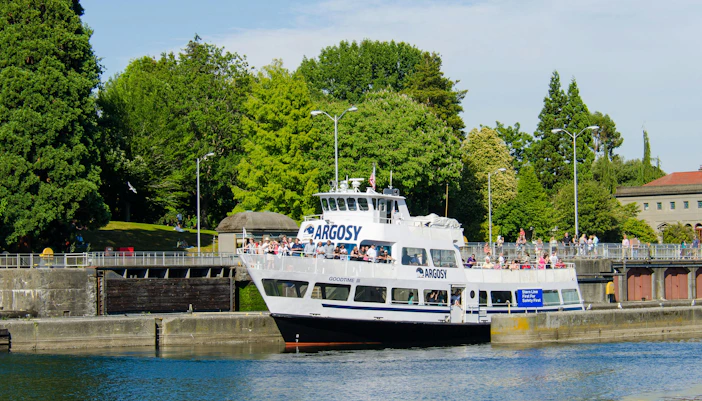
Also nearby
Argosy Seattle Harbor Cruise
Distance: 0.1 mi — about 2 min walk
Worth knowing: This is the most natural waterfront extension if you want to pair marine life indoors with open-water skyline views on the same day.
Olympic Sculpture Park
Distance: 0.7 mi — about 15 min walk
Worth knowing: It is a good choice if you want a free, low-pressure walk after the aquarium instead of another timed attraction.
Eat, shop and stay near Seattle Aquarium
- On-site: The aquarium café at Pier 59 is best for drinks and light snacks, not a full destination meal.
- Pike Place Market (about 7–10 min walk, 85 Pike St): Best overall nearby food stop if you want real choice, from quick snacks to sit-down seafood, without straying far from the waterfront.
- Miner's Landing (about 5 min walk, Pier 57, 1301 Alaskan Way): Handy for quick waterfront bites if you are pairing the aquarium with the Seattle Great Wheel.
- Waterfront cafés along Alaskan Way (about 5–10 min walk, Alaskan Way corridor): Useful when timing matters more than value, especially before a fixed entry slot.
- 💡 Pro tip: Eat before 12 noon or after 2pm if you are combining the aquarium with Pike Place Market, because both areas get noticeably busier across the lunch window.
- Seattle Aquarium gift shop: Best for kid-friendly souvenirs, marine-life gifts, and conservation-minded merchandise right at the exit.
- Pike Place Market: Best for local food gifts, crafts, and Seattle-specific souvenirs if you want something less aquarium-themed.
- Waterfront souvenir shops: Convenient for quick Seattle keepsakes, though the location usually matters more than bargain pricing.
The waterfront works well if you are in Seattle for a short trip and want the aquarium, Pike Place Market, and other central sights within walking distance. It is convenient, scenic, and easy for first-timers, but it is rarely the cheapest base. For longer stays, many visitors prefer a nearby neighborhood with better evening options and slightly less tourist traffic.
- Price point: This area usually skews mid-range to expensive, especially close to the waterfront itself.
- Best for: Short city breaks, families who want easy daytime logistics, and visitors building a walkable downtown itinerary.
- Consider instead: Belltown or the broader downtown core usually gives you more hotel choice, easier transit connections, and better evening dining if the aquarium is only one part of your Seattle plan.
Frequently asked questions about visiting Seattle Aquarium
Most visits take 1.5–2 hours. If you are visiting with young children, waiting for feedings, or slowing down in the Ocean Pavilion, it is easy to spend 2.5–3 hours without feeling like you are stretching the experience.
Yes, booking ahead is the safer choice because Seattle Aquarium uses timed entry. That matters most on summer weekends, holiday periods, and popular late-morning slots, when walk-up visitors can face waits or find their preferred entry times gone.
There is no separate express lane in the usual sense, so the real time-saver is reserving a timed ticket ahead. Pre-booking helps you avoid the uncertainty of walk-up entry, which is where the longest waits usually happen on busy days.
Arrive about 10–15 minutes before your slot. That gives you enough buffer for scanning, security, and getting oriented without showing up so early that you are just waiting outside for your time to begin.
Yes, you can bring a small bag or backpack, but you need to carry it the whole time. There is no bag or coat check, so this is not a good stop to do with luggage or a full day's worth of gear.
Yes, personal photography is generally allowed, but flash and bulky filming setups are not the right fit for the exhibit spaces. The main thing to remember is that interactive zones and presentation areas can get tight, so staff access comes first.
Yes, groups can visit, but it is worth choosing your time carefully. School and youth groups often appear on weekday daytime schedules, so independent visitors who want a quieter experience usually do better at opening or later in the afternoon.
Yes, it is one of the easier Seattle attractions to do with children because the visit is manageable in length and the hands-on elements are strong. The touch pools, otters, octopus, and reef tank give you enough variety to keep both toddlers and grade-school children engaged.
Yes, the main public route, exhibits, and restrooms are wheelchair-accessible. The aquarium also offers wheelchairs on a first-come basis, which is useful if someone in your group can walk some of the visit but not the full route comfortably.
Yes, there is a café on site for drinks and light snacks, and there are much broader food options within a short walk. Pike Place Market is the easiest nearby choice if you want a real meal before or after your visit.
Yes, same-day re-entry is allowed. Keep your wristband or admission proof with you, because it is the only easy way to step out for a short break and return without creating confusion at the entrance.
The best time to visit is right at 9:30am opening or after 3pm. Those windows usually feel calmer than the 11am–1pm rush, when families, timed-entry arrivals, and presentation-driven crowds bunch together around the same headline exhibits.