Seattle Tours

Is the Seattle Aquarium worth visiting?

Saltwater light, harbor air, and the sound of kids pressing up to the glass make the first few minutes feel distinctly Seattle. You move from jellyfish and tide pools to sea otters and a reef tank large enough to reset your sense of scale, all with Elliott Bay just outside.

The aquarium was built to make the Pacific Northwest’s marine world legible to the city around it, and the newer Ocean Pavilion expands that mission into coral-reef conservation. It is less about spectacle alone than about showing how local waters connect to the wider ocean.

The payoff is specificity. You leave with a sharper sense that Seattle’s shoreline is not just scenery, but a living system of kelp forests, octopus dens, seal haul-outs, and migrating fish.

Skip it if you want an all-day attraction or only enjoy very large aquariums with long tunnel walks.

What’s inside the Seattle Aquarium?

Pier 59 lobby at Seattle Aquarium
1/8

Pier 59 lobby and orientation

Start here for the clearest sense of how the campus fits together. The original building sets the local focus early, so first-time visitors who rush past it often miss the aquarium’s strongest Pacific Northwest context.

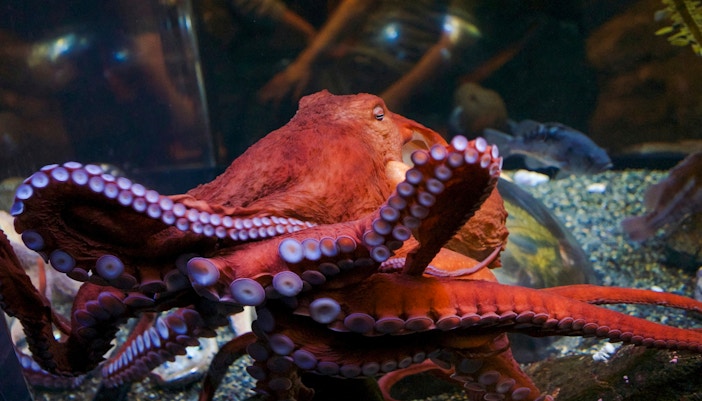
Jellyfish and octopus galleries

These darker, slower rooms are among the most absorbing in the older building. The jellyfish displays draw immediate crowds, while the giant Pacific octopus rewards patience if you want more than a quick look.

Caring Cove touch pools

This is the hands-on stop for sea stars, anemones, and other tide-pool species, with staff nearby to guide interactions. Families often linger here longer than planned, especially on busy weekends and school-break days.

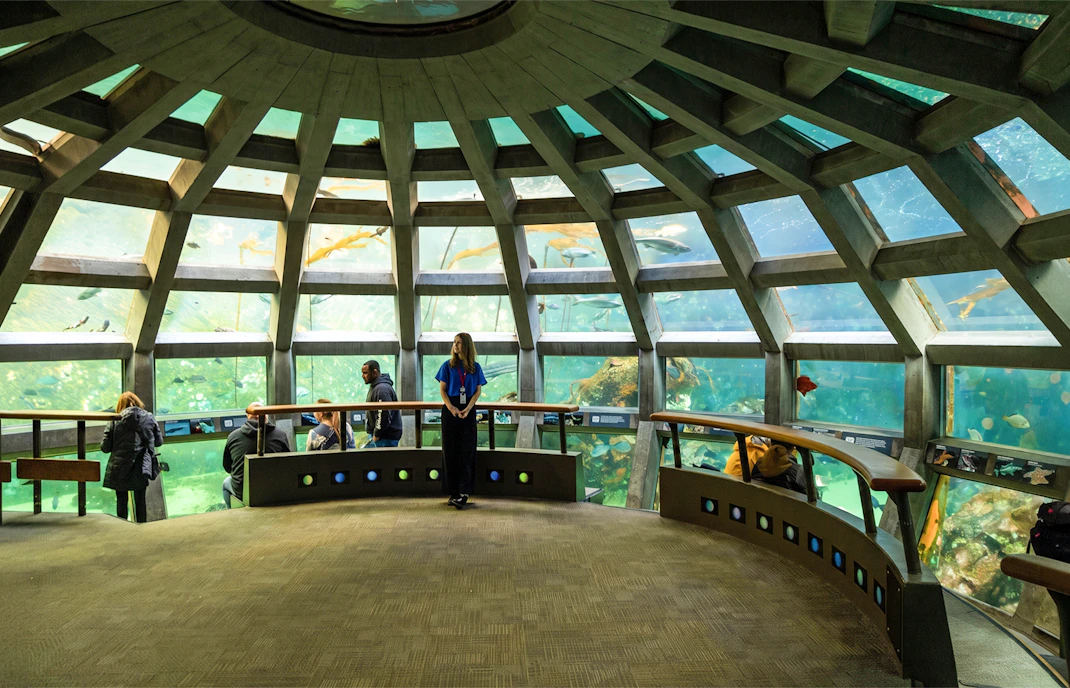
Window on Washington Waters

The 120,000-gallon habitat is the aquarium’s signature local tank, recreating a Puget Sound kelp forest with salmon, rockfish, and wolf eels. Time your visit with a diver talk if one is scheduled.

Sea otters, harbor seals, and fur seals

These marine mammal habitats on Pier 60 bring the most obvious personality to the visit. Feeding times are especially popular, so expect people to gather early around the railings.

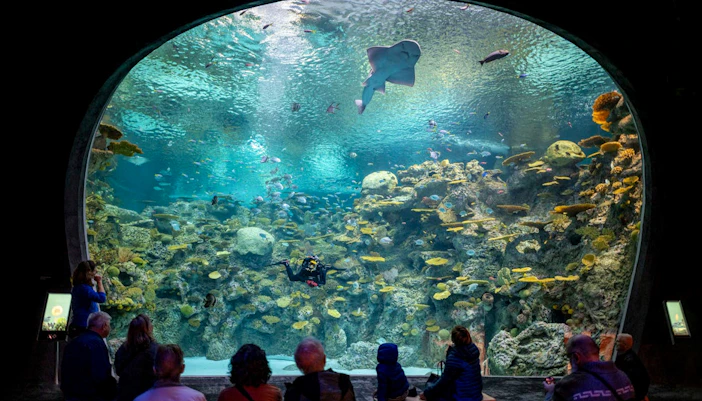
Ocean Pavilion reef

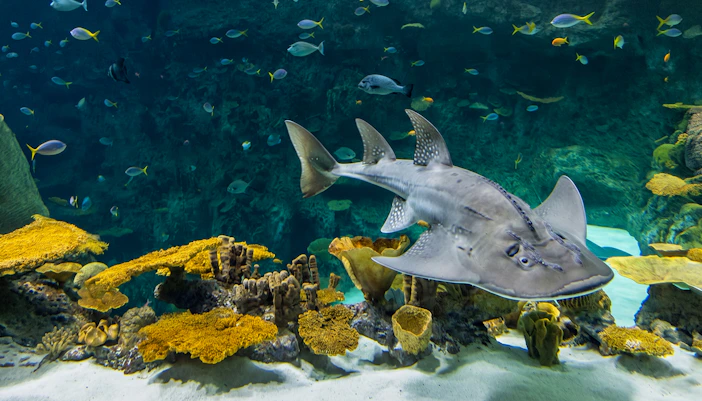
The newer pavilion’s multi-story tropical reef is the visual climax of the route, filled with rays, leopard sharks, coral, and schooling fish. This is where many visitors slow down and stay longest.

One Ocean Hall

This immersive theater-style space adds a quieter pause between tanks. It is useful if you want a break from the busiest viewing windows, and especially helpful when you are visiting with children.

Gift shop, café, and waterfront views

Leave a little time for the exit area in Pier 59. The café is modest, but the location makes it easy to continue straight into a waterfront stroll toward the Great Wheel or Pike Place Market.

How to Explore the Seattle Aquarium

Budget 90 minutes if you want the essentials, and 2–2.5 hours if you want to catch a feeding, pause at the touch pools, and spend real time in the Ocean Pavilion. If you can, book an early slot and start at Pier 59, where the local exhibits do the best job of grounding the whole visit. Move through the jellyfish and octopus rooms first, then the touch pools and Window on Washington Waters before crossing to Pier 60 for the otters, seals, and Ocean Pavilion. That order works because it follows the clearest narrative and lets you reach the most popular mammal habitats before the midday buildup.

  • Must-see: Window on Washington Waters, the sea otters, and the Ocean Pavilion reef.
  • Optional: One Ocean Hall adds about 15 minutes, and the puppet show or a slower stop at the touch pools can add another 20–30. Self-paced works well here because the route is intuitive and signage is strong, but arriving in time for a diver talk or animal feeding adds the context that tanks alone cannot.
Brief history of the Seattle Aquarium

  • 1977: The Seattle Aquarium opens on Pier 59, giving the city a public waterfront space focused on marine education and the life of Puget Sound.
  • Late 20th and early 21st centuries: The campus is updated and expanded over time, with renovated exhibit spaces and a stronger conservation and public-programming role.
  • 2022: Family-focused additions such as Toddler Cove reflect the aquarium’s growing emphasis on younger visitors and all-ages learning.
  • 2024: The Ocean Pavilion opens on Pier 60, adding a major tropical reef habitat and significantly increasing the aquarium’s size and visual impact.
  • Today: The aquarium operates as a nonprofit waterfront campus that combines Pacific Northwest habitats, tropical marine life, and daily interpretation in one visit.

More than just an Aquarium

The Seattle Aquarium works as more than an exhibit space. Because it is a nonprofit with a conservation brief, much of what you see is tied to education, habitat awareness, and public access rather than pure display. Its Connections Program helps reduce cost barriers for local communities, and daily talks keep the focus on how Puget Sound and coral reefs are changing. That gives the visit a more civic tone than a purely entertainment-led aquarium, which is a good fit if you want your ticket to support marine learning as well as an afternoon out.

Frequently Asked Questions About the Seattle Aquarium

Yes, especially if you want a compact waterfront attraction that feels distinctly local. The mix of Puget Sound habitats, sea otters, and the Ocean Pavilion makes it easy to fit into a half-day plan.

More Reads